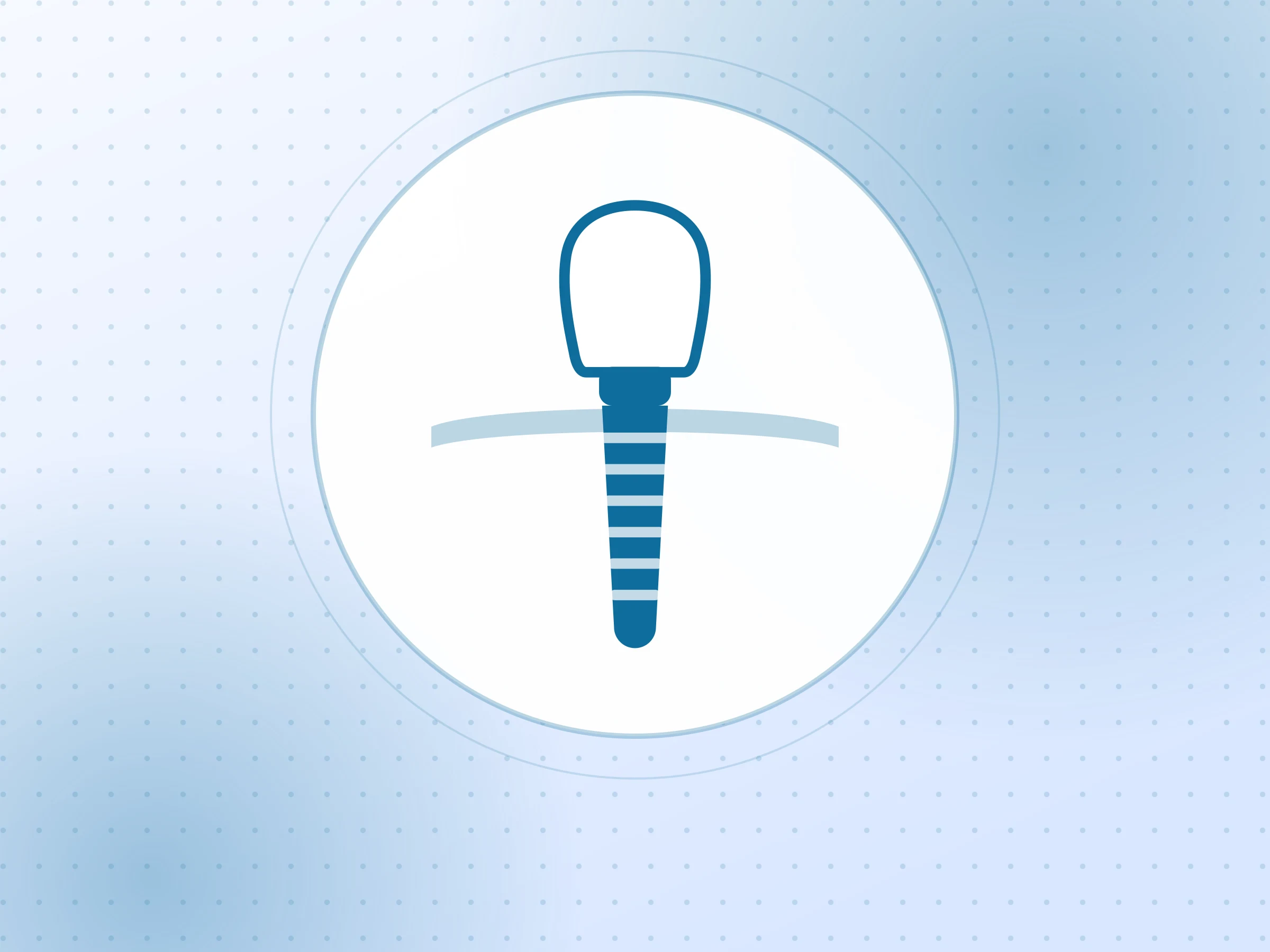
What is Dental Implants?
A dental implant is a small biocompatible (usually titanium) post placed into the jawbone to replace the root of a missing tooth. Once it fuses with the bone, it supports a crown, bridge, or denture that looks and functions like a natural tooth.
Why is it needed?
Missing teeth can affect chewing, speech, and confidence, and the jawbone can shrink over time where a tooth is lost. Implants replace both the root and the visible tooth, helping to preserve bone and restore full function.
Symptoms & signs
- One or more missing teeth
- A loose or uncomfortable denture
- Difficulty chewing certain foods
- Gaps affecting your smile or speech
Common causes
- Tooth loss from decay or gum disease
- Injury or trauma
- Failed or non-restorable teeth
- Congenitally missing teeth
The procedure, step by step
- Assessment & planning. The dentist examines your mouth and jawbone (often with an X-ray or scan) to plan implant position.
- Implant placement. Under local anaesthetic, the implant post is gently placed into the jawbone.
- Healing (osseointegration). Over several weeks to a few months, the implant fuses with the bone to form a stable foundation.
- Abutment & crown. A connector is attached and a custom crown is fitted to match your natural teeth.
Typically staged over 2–4 visits across several months, allowing time for the implant to integrate with the bone.
Minor swelling or discomfort for a few days after placement is common and usually manageable with recommended pain relief. Full integration takes a few months.
Benefits
- Looks, feels, and functions like a natural tooth
- Helps preserve jawbone and facial structure
- Does not rely on grinding down neighbouring teeth (unlike a bridge)
- Long-lasting with good oral hygiene
Possible risks
- Temporary swelling, bruising, or discomfort
- Infection at the implant site if aftercare is not followed
- Implants require enough healthy bone; a graft is sometimes needed first
- Rarely, an implant may not integrate and needs to be reassessed
Alternatives
- Dental bridge
- Removable partial or full denture
Aftercare
- Keep the area clean and follow all post-operative instructions
- Avoid smoking, which can slow healing and affect success
- Brush and floss around the implant daily
- Attend regular check-ups to monitor the implant and gums
When to visit a dentist
If you have one or more missing teeth or an uncomfortable denture, a dentist can assess whether implants are a suitable option for you.